10 places to buy website traffic — and how to choose wisely.
There's no universal best place to buy clicks. A search ad, a sponsored story and a publisher placement reach people in very different moments. This guide shows what each can do, where it can fall short, and what to check before paying for traffic.
Buyers often compare traffic providers on price alone. That misses a more useful question: What was the visitor doing just before seeing the ad?
Search advertising
People express an interest by typing a query. The relevance of the keyword, offer and page matters a great deal.
Publisher placements
People encounter an ad while browsing. The creative must earn attention, and the page must fulfill its promise.
Sponsored discovery
People discover a suggestion alongside stories, answers or community discussion. Useful content can be a stronger fit than a hard sell.
Understanding the buying options
See what you are actually buying.
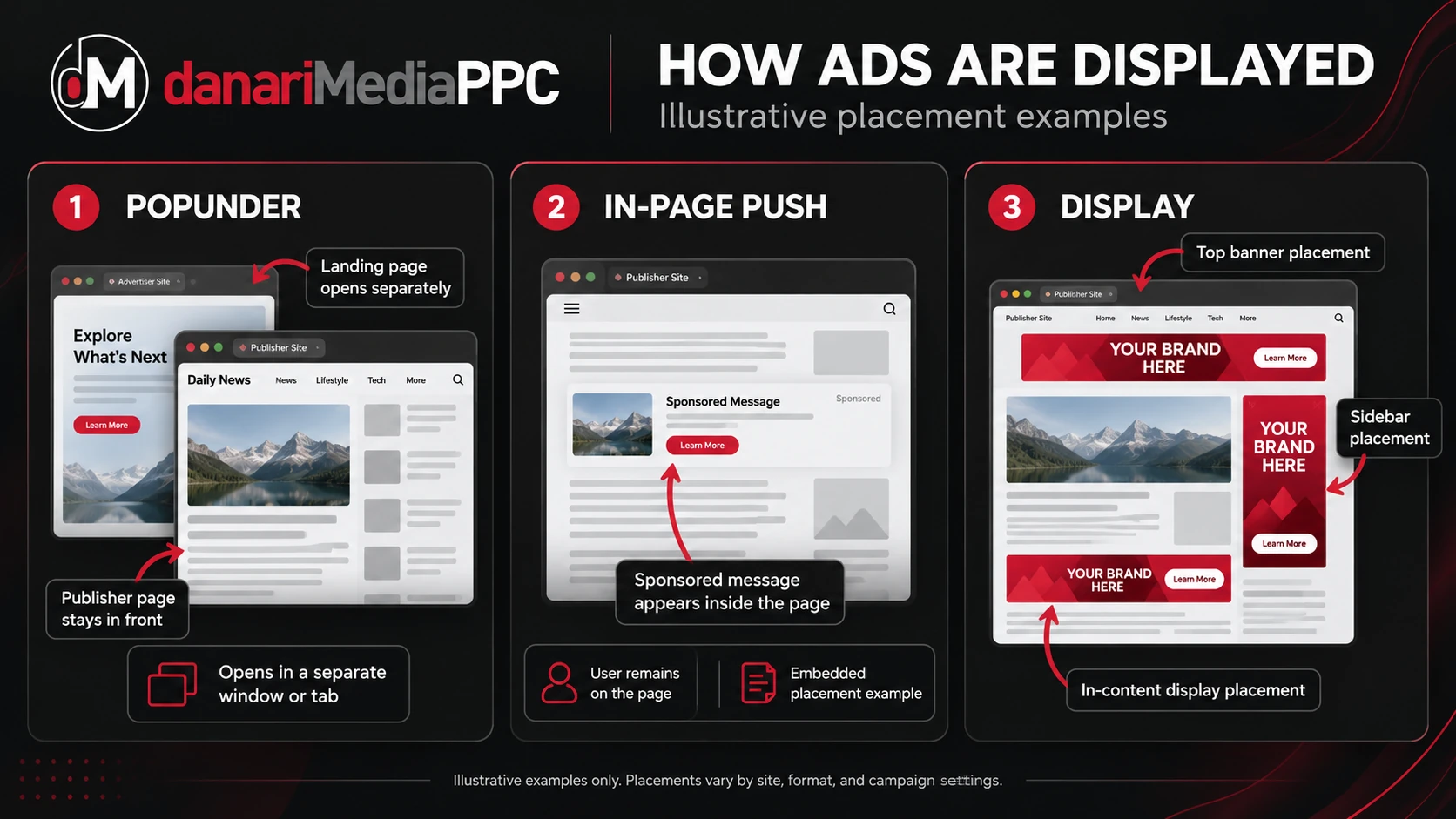
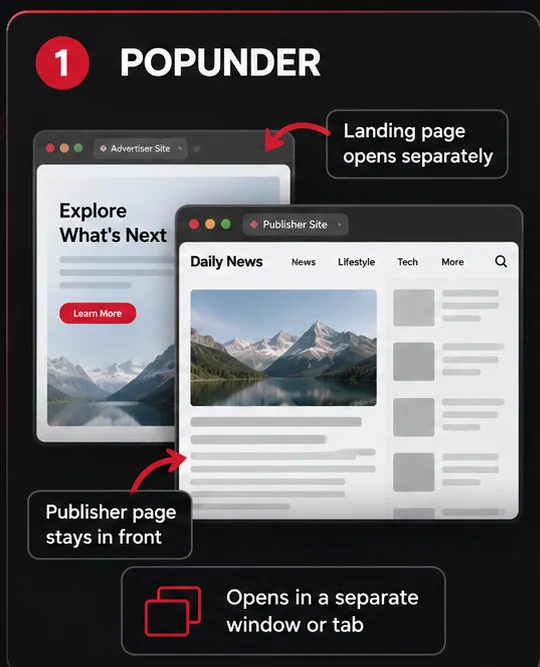
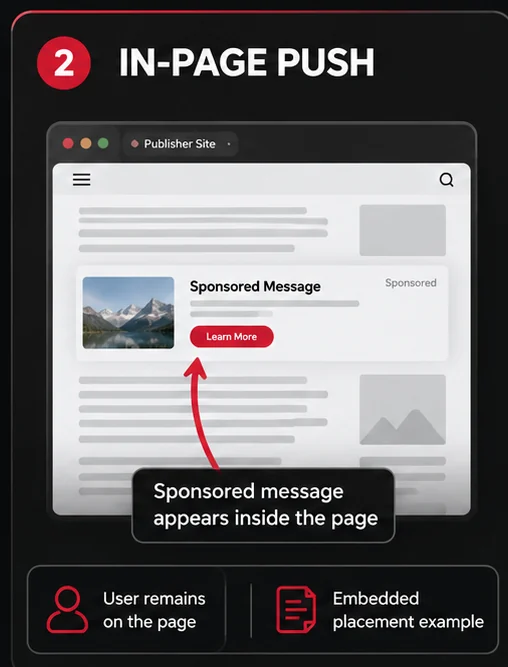
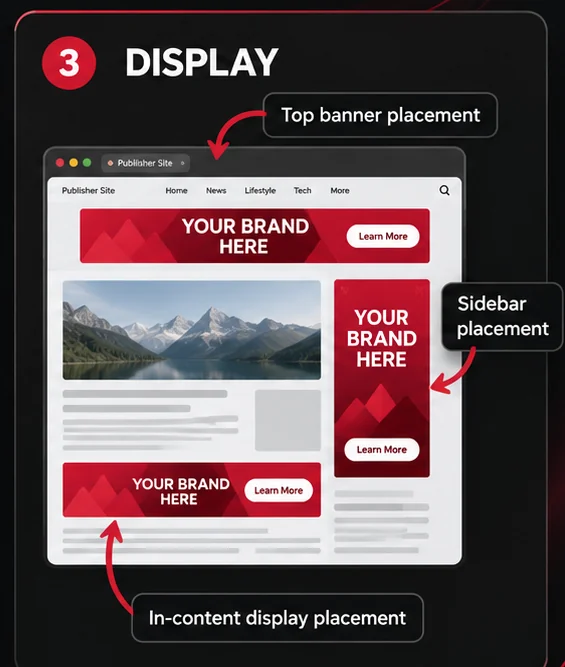
Before choosing a provider, look at the format and how the advertisement is delivered. These generic examples make the distinction between a separate destination, an in-page message and a display ad clear.
Example layouts are fictitious and illustrate format mechanics only. Actual placements depend on the publisher, available inventory, browser behavior and campaign settings. No contextual targeting or matching of page topics is implied.
A practical comparison, not a popularity ranking
Ten platforms worth understanding.
These services serve different advertising needs. Inclusion doesn't imply endorsement, and list order isn't based on traffic volume, cost or performance. Review each platform's current capabilities and policies before buying.
01
Publisher advertising
Danari Media PPC
Consider it for: incremental reach through popunder, in-page push or display, with geographic controls and source-level campaign review.
Watch for: publisher visits generally don't carry the same purchase intent as a search query.
02
Search advertising
Microsoft Advertising
Consider it for: campaigns built around the terms people search for.
Watch for: strong intent still needs relevant keywords, landing pages and ongoing management.
03
Native discovery
Taboola
Consider it for: promoting a useful article, guide or discovery-friendly landing page through native placements.
Watch for: the headline and landing experience must work for people who weren't actively searching for you.
04
Native discovery
Outbrain
Consider it for: content-led campaigns and audience discovery across participating publishers.
Watch for: performance can differ significantly by publisher, topic and creative.
05
Publisher placements
BuySellAds
Consider it for: matching an offer to specific publisher audiences and advertising environments.
Watch for: availability and scale depend on suitable inventory.
06
Community context
Reddit Ads
Consider it for: reaching audiences around relevant communities and interests.
Watch for: an overtly generic sales pitch may be a poor fit for the surrounding discussion.
07
Performance formats
PropellerAds
Consider it for: testing alternative performance placement types and audience mixes.
Watch for: compare placements separately; a low click cost is not proof of a useful visit.
08
Question-led discovery
Quora Ads
Consider it for: introducing relevant products or expertise while readers research a subject.
Watch for: somebody seeking information may be far from a purchase decision.
09
Content-style placements
Adblade
Historical fit: publisher advertising built around a content or brand message.
Consider it for: comparing publisher-based ad formats and performance-oriented reach.
Watch for: check format fit, traffic screening and post-click results independently.
Platform availability, supported regions and policies can change. Confirm current details before planning a campaign. No U.S. ranking or monthly traffic claims are made about these providers.
The buying checklist
Five questions that can save an expensive test.
A worthwhile campaign begins with an honest conversation about where the visitors come from and what success looks like. Ask the questions on the right before approving the buy.
01 Where will the visitors actually come from?
02 What targeting, format and exclusions can I control?
03 What event counts as a billable click or visit?
04 Can I compare each source in my own analytics?
05 What would make this test worth repeating?
Evaluate the outcome
A traffic report isn't a business result.
Clicks matter because they get people to the page. What happens next tells you whether a source is worth keeping.
Before launching, make sure your destination works on the devices you intend to reach. Add consistent tracking parameters, identify each traffic source, and confirm important events in your analytics. If your objective is awareness, look at meaningful engagement. If it is lead generation, track the lead—not a page load masquerading as one.
Compare sources under the same review criteria. One may give you broader reach at a lower cost; another may send fewer visitors who take more useful action. Neither outcome can be determined by an advertising network's headline visitor count alone.
A simple measurement framework
Was the visit from the audience we intended to reach?
Did the landing page work on that device?
Did the visitor engage or complete the action we defined?
Can the result be attributed to a source or placement?
Does the outcome justify additional spending?
Framework for evaluation, not a report of real or simulated campaign results.
Where Danari fits
When publisher traffic is a sensible option.
Danari has operated as an independent advertising network since 2009. We work with advertisers and agencies that want to extend campaign reach using publisher traffic, supported by geographic targeting and source-level review.
That can be useful for content discovery, brand exposure or top-of-funnel campaigns with suitable landing pages. It may not be the right first choice when a business depends on a visitor having typed a very specific, high-intent search.
That's not a weakness to hide; it's a distinction that helps buyers plan better campaigns.
Is buying website traffic the same as buying Google organic traffic?
No. Paid traffic is an advertising acquisition channel. Organic Google traffic comes from unpaid appearances in Google's search results. Be wary of promises that paid visits alone will produce organic rankings.
Should I choose the cheapest traffic provider?
Not without looking at source, placement, targeting and what the visitors do. A low-priced click is poor value if the visit can't reasonably support your objective.
How much traffic should I buy first?
Start with a budget and review window that let you compare useful behavior across sources. The right test size depends on campaign economics, inventory and the action you're trying to measure.
Plan a campaign with more clarity
Know what you're buying before you scale.
If publisher advertising sounds like a possible fit, explore Danari's formats and targeting controls. Bring us a landing page and a measurable goal; we'll discuss what a sensible test could look like.